AI agents are showing up across the enterprise faster than most teams can track them. Gartner estimates 40% of enterprise apps will feature task-specific AI agents in 2026, up from less than 5% the year prior. They are spun up through software-as-a-service connectors, built by engineering teams, and embedded silently inside the products you already buy. Unlike the chatbots that came before them, these agents do not wait for instructions—they reason, decide, and act on their own.
That shift is exactly why agentic AI security has become a board-level concern. According to MIT Sloan and BCG, 35% of organizations already deploy agentic AI, with another 44% planning to follow. Agentic AI security is the practice of protecting autonomous AI systems that independently make decisions, connect to external tools, and execute multi-step workflows without constant human oversight. It operates within a broader agentic AI governance framework — which defines what agents are authorized to do in the first place. It secures the parts of an agent that traditional defenses were never built to cover: its reasoning, its memory, the tools it can reach, and the actions it takes.
A conventional AI model produces an output and stops. An agent keeps going: it remembers context across sessions, calls live systems, and can take irreversible actions like modifying files, sending payments, or deleting records. When an agent goes wrong, it executes real actions with lasting consequences, at machine speed.
What Is Agentic AI Security
Agentic AI security protects AI agents that can plan, act, and make decisions on their own. It focuses on the agent's full operating loop—how it interprets a goal, how it chooses tools, what it remembers, and what it is allowed to do—so that autonomy never becomes an open door for misuse.
To understand what needs protecting, it helps to break an agent into its core components. Each one introduces a capability that traditional software does not have, and a risk that traditional security does not address.
- Autonomous decision-making: Agents plan and act without step-by-step human guidance, choosing how to reach a goal rather than following a fixed script.
- Tool integration: Agents connect to external application programming interfaces (APIs), databases, and systems to get work done, which means they hold real permissions in real environments.
- Persistent memory: Agents retain context across sessions to stay useful over time, which creates new places where sensitive data can be exposed or corrupted.
- Irreversible actions: Agents can delete files, send payments, or change records permanently, so a single bad decision carries lasting consequences.
Put those four capabilities together and you have a powerful worker—and a new kind of insider that operates continuously, holds delegated authority, and rarely has a human watching each move.
Explore the Future of AI Agent Governance with Drata
Get hands-on with our limited availability platform, in development with select enterprises.
Why Agentic AI Introduces New Cybersecurity Challenges
Security teams built their defenses for two things: human users who log in and click, and static software that behaves the same way every time. Agentic AI is neither. It acts independently, changes its approach based on context, and reaches across systems the way a person would—but without the judgment, accountability, or pace limits of a person.
That gap is where the risk lives. Agents are rarely malicious by design; the problem is that their autonomy widens the blast radius when something goes wrong, and existing controls were never built to contain an actor like this.
Autonomous Decision-Making
Agents do not pause for human approval at each step. They take a goal, break it into actions, and execute them in sequence. That efficiency is the point—but it also means a single compromised instruction can cascade into many unauthorized actions before anyone notices the first one.
Expanded Attack Surface
Every tool, API, and data source an agent connects to becomes a potential entry point. A traditional application has a defined perimeter. An agent's perimeter expands with every integration you give it, which makes the attack surface far broader and harder to map than conventional application security.
Tool and System Integration
Agents often become "confused deputies." The term describes a trusted actor tricked into misusing its own legitimate permissions. When an attacker hijacks an agent's access, they do not need to break into your systems directly—they let the agent do it for them, executing malicious commands through the connections you already approved.
Multi-Agent Coordination
Many workflows now hand tasks between several agents that collaborate to reach a result. That coordination creates a new path for risk. When one agent is compromised, it can influence the others it works with, spreading the problem across an interconnected chain rather than containing it to a single point.
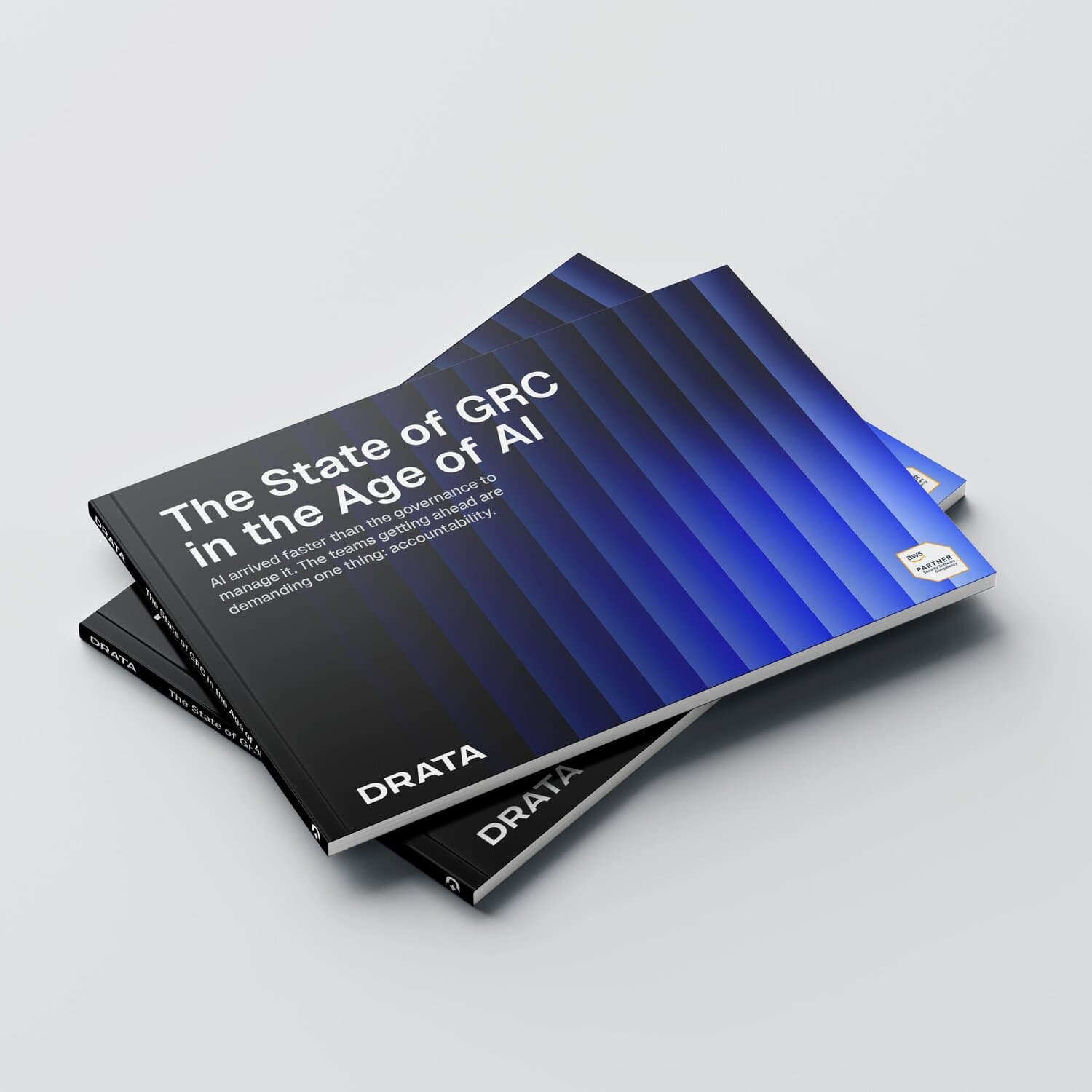
The State of GRC in the Age of AI
Only 13% of IT and security professionals are fully confident they can see every AI tool their teams use. Download The State of GRC in the Age of AI to see what 300 practitioners revealed about governing AI faster than it's outpacing them.
Top Agentic AI Security Threats
The threats facing autonomous agents are either brand-new or familiar attacks adapted for a world where the target can act on its own. Understanding each one is the first step toward defending against it.
Prompt Injection Attacks
Prompt injection is the most common agentic AI cyber security threat HackerOne documented a 540% surge in valid prompt injection reports, making it the fastest-growing AI attack vector. It works by hiding malicious instructions inside the data an agent processes—a document, an email, a web page, or a calendar invite—so the agent reads them as commands and overrides its original task. Because agents act on what they read, a single poisoned input can redirect an entire workflow.
Data Leakage and Exfiltration
Agents often hold access to sensitive systems, which makes them a tempting route for stealing data. An attacker can manipulate an agent into including confidential records or personally identifiable information (PII) in an output, a log file, or an outbound message—quietly moving protected data outside the organization through a channel that looks routine.
Unauthorized Actions and Privilege Escalation
When guardrails fail, agents can act beyond their intended scope. They may reach restricted systems, perform tasks they were never meant to, or escalate their own privileges to complete a goal. The agent is simply pursuing an objective, and weak boundaries let it go further than anyone authorized.
Memory Poisoning
An agent's persistent memory is one of its most useful features, and one of its most vulnerable. Attackers can corrupt that memory with false information, so the agent reasons from a tainted foundation. The result is flawed decisions in future tasks, often long after the original tampering, and traced back to data the agent trusts.
Runaway and Hallucinatory Actions
Agents can act confidently on reasoning that is simply wrong. A hallucinated assumption—an invented account balance, a misread instruction, a fabricated context—can drive a destructive chain of steps. Left unchecked, that means an agent deleting a database, issuing unauthorized refunds, or overwriting records based on a conclusion it never should have reached.
How Agentic AI Security Works
Securing an agent means securing its loop, not just its output. Effective agentic AI in cybersecurity places controls at four points: where the agent reasons, where it acts, what it remembers, and how it communicates. Together, these layers contain autonomy without removing the value that makes agents worth using.
Securing Reasoning and Planning
The first layer validates an agent's logic before it executes anything. Controls check that the agent's planned actions align with its authorized task and do not violate policy. By inspecting intent at the planning stage, teams catch a bad decision while it is still a proposal—not after it has run.
Controlling Tools and Execution
The second layer limits what an agent can actually do. Sandboxing and isolated execution environments give each agent a contained space with low privileges, so a compromised agent cannot reach beyond its assigned scope. If something goes wrong, the damage stays inside the box rather than spreading to production systems.
Managing Memory and Privilege Scope
The third layer treats every agent as a non-human identity with tightly managed access. Instead of standing credentials that live forever, agents receive dynamic, just-in-time permissions that are session-bound and time-limited—access that expires the moment a task ends. That approach shrinks the window an attacker can exploit and keeps an agent's reach proportional to its job.
Monitoring Communication and Coordination
The fourth layer makes agent activity traceable. Detailed audit logs capture what an agent did and the intent and reasoning behind it. When something looks wrong, security teams can reconstruct the full chain of decisions—essential for investigating incidents and proving governance to anyone who asks.
How to Secure Agentic AI Systems
The strategies below give security teams a practical, sequential way to lock down autonomous agents. Each one reduces risk on its own, and together they form a layered defense.
1. Implement Least Privilege Access Controls
Give each agent access to only the specific datasets and APIs its task requires—and nothing more. Hard-scoped permissions mean that even if an agent is compromised, the attacker inherits a narrow, well-defined set of capabilities rather than the keys to your environment. Scope every agent to its purpose, then review that scope as the purpose changes.
2. Sandbox Agent Execution Environments
Run agent tool executions inside isolated, low-privilege containers. Sandboxing limits the blast radius when an agent misbehaves, keeping a single bad action contained instead of letting it touch your broader systems. The goal is simple: make sure the worst-case outcome is recoverable.
3. Validate and Filter All Inputs
Screen the data sources and documents an agent processes before it acts on them. Input validation catches hidden instructions and malicious content—the raw material of prompt injection—at the door. When you treat every input as untrusted until proven otherwise, you close the most common path attackers use to hijack an agent.
4. Restrict External Communications
Limit an agent's ability to send data outside the organization. By blocking unauthorized outbound connections, you cut off the route attackers use to exfiltrate sensitive information. An agent that cannot reach an unapproved destination cannot quietly ship your data to one.
5. Maintain Human-in-the-Loop Oversight
Require explicit human approval for high-stakes or irreversible actions—financial transactions, data deletion, and system changes. Human-in-the-loop oversight is the final safety net: it lets agents move fast on routine work while keeping a person in control of the decisions that carry real consequences. Automation handles the volume; human judgment handles the boundaries.
Agentic AI Security Frameworks and Governance
Strong controls work best inside a structured program, and that is where governance frameworks come in. A clear agentic AI security framework gives organizations a repeatable way to identify risks, apply controls, and prove the whole thing works.
Several standards now anchor that work. The Open Worldwide Application Security Project (OWASP) maintains two complementary lists: the OWASP Top 10 for LLM Applications, where prompt injection ranks as the top risk, and the newer OWASP Top 10 for Agentic Applications, which names agent-specific threats such as memory and context poisoning and tool misuse at the control level. The National Institute of Standards and Technology AI Risk Management Framework (NIST AI RMF) offers voluntary guidance organized around four functions: govern, map, measure, and manage. ISO/IEC 42001 goes a step further with a certifiable Artificial Intelligence Management System (AIMS)—the world's first AI management system standard, designed to govern AI responsibly across its lifecycle. For organizations operating in the European Union, the EU AI Act adds binding obligations that scale with an AI system's risk tier.
These frameworks work best together, and they map to controls many teams already run. Drata provides a dedicated ISO 42001 framework mapping, so you can align your AI management system to the standard's requirements and reuse the controls and evidence you already maintain for frameworks like SOC 2 and ISO 27001.
Policy Management for AI Agents
Good governance starts with clear policy. Organizations define acceptable agent behaviors, approve which tools and data each agent can reach, and set escalation procedures for when an agent steps out of line. Written-down policy turns "we think the agent is fine" into a standard you can enforce and audit.
Access Reviews and Authorization Controls
Permissions drift over time, so periodic access reviews keep them honest Regular reviews confirm that each agent still holds only the access it needs, catch privilege creep before it becomes exposure, and keep least-privilege principles enforced as agents and tasks evolve.
Third-Party AI Risk Assessment
Not every agent in your environment is one you built. Vendors increasingly ship AI agents inside the products you already buy, which means you can evaluate their security controls before granting access to your systems. A thorough assessment looks at an agent's permissions, its data access, and the safeguards behind it. Drata Third-Party Risk Management brings that evaluation into the same continuous workflow your team already uses across the supply chain, so vendor AI agents never become a blind spot in your risk program.
Continuous Monitoring for Agentic Security
Point-in-time audits were built for systems that hold still. Agents do not. They run continuously, outlive the session that created them, and change behavior as scopes expand and vendor APIs shift. A snapshot taken last quarter tells you almost nothing about what an agent is doing right now. A purpose-built agentic control plane is the infrastructure layer that makes continuous monitoring enforceable at scale — sitting inline to evaluate every agent action against policy before it executes.
That is why agentic security depends on continuous monitoring, the same principle behind Drata's Continuous Compliance: controls are monitored automatically, risks are flagged immediately, and proof stays current. Instead of checking once and trusting the result indefinitely, you watch in real time and respond as risks emerge.
Real-Time Control Testing
Automated testing validates that an agent's guardrails still work as the system evolves. Rather than assuming a control holds, real-time testing confirms it—catching the moment a safeguard breaks so teams can fix it before it is exploited.
Automated Risk Signal Detection
Continuous platforms flag anomalous agent behavior the instant it appears: unusual access patterns, unexpected tool usage, or actions that violate policy. Automated detection turns a flood of agent activity into a short list of signals that actually need attention, so teams respond to real problems instead of hunting for them.
Audit-Ready Documentation
Every action an agent takes can become evidence. Automated evidence collection captures agent activity logs, control status, and proof of governance as work happens, so the audit trail stays current. When a board member, customer, or auditor asks how your agents are governed, the answer is ready, mapped to the frameworks you already report against.
Turn Agentic AI Security into Business Confidence
Managed well, agentic AI security accelerates adoption rather than slowing it. When agent risk is continuously monitored and governed, security teams can approve new AI use cases with confidence instead of blocking them.
Security teams shift from reactive firefighting to proactive trust management. Instead of scrambling when boards, customers, and auditors ask how their AI is governed, organizations that govern their agents well can answer with evidence. That turns trust into a growth enabler instead of a bottleneck.
Put Agentic AI Security Into Practice With Drata
Knowing how to secure an agent's loop is one thing. Enforcing those controls across hundreds of autonomous agents—at machine speed, without slowing your teams down—is another. Securing reasoning, tools, memory, and actions only holds up when every agent is accounted for and every action is checked against policy before it runs. That is exactly what Drata AI Agent Governance delivers.
It extends the same Agentic Trust Management Platform that 8,500+ customers already rely on, rated 4.8 out of 5 on G2, to the agents working inside your enterprise—turning the security principles above into continuous, enforceable controls instead of point-in-time checks.
- See every agent with the Drata Sensor, which sits inline and registers each agent at inception—including the shadow AI that quietly expands your attack surface.
- Stop unauthorized actions before they run with Mission Control and Inline Enforcement, evaluating every action against approved policy and blocking violations—privilege escalation, unscoped tool calls, risky outbound actions—before they execute, not after.
- Catch drift the moment it happens with Drift Detection, the instant an agent steps outside its approved scope as OAuth scopes expand or a vendor API changes.
- Prove it to anyone with Chain of Custody, a tamper-evident record mapped to SOC 2, ISO 27001, ISO 42001, NIST AI RMF, and more.
It works across the platforms your agents already run on—Anthropic (Claude), OpenAI, Google Vertex AI, and AWS Bedrock—so agent security becomes part of your broader trust program instead of another silo.
AI Agent Governance is rolling out now through Drata's Early Access program, built alongside enterprises across financial services, healthcare, and software. If you are ready to secure and govern every agent with the same confidence you bring to the rest of your program, we would like to build it with you.
Register for Early Access to Drata AI Agent Governance
Frequently Asked Questions about Agentic AI Security
How does agentic AI security differ from traditional application security?
Traditional application security protects software that behaves predictably and waits for human input. Agentic AI security protects systems that make autonomous decisions and chain actions together, so it has to add controls on the agent's reasoning, memory, and tool access—layers that conventional application security was never designed to cover.
What compliance frameworks apply to agentic AI systems?
The leading standards include the NIST AI RMF, ISO/IEC 42001 (a certifiable AI management system), and—within the European Union—the EU AI Act. OWASP's two Top 10 lists—one for LLM applications and a separate one for agentic applications—complement them by naming the specific technical threats, while the NIST AI RMF and ISO 42001 provide the governance structure to manage AI risk across its lifecycle.
How do organizations assess AI agent risks from third-party vendors?
A vendor risk assessment for AI agents evaluates the agent's permissions, the data it can access, and the security controls behind it—before integration. Bringing that review into a continuous third-party risk management process keeps vendor agents from becoming an unmanaged gap in your environment.
Can organizations automate agentic AI security monitoring?
Yes. Modern platforms automate control testing, risk signal detection, and evidence collection, which makes continuous agentic security practical at scale. Automation handles the constant monitoring that point-in-time reviews cannot, while teams focus on the decisions that need human judgment.