Audit season used to mean all-hands scrambles, overflowing spreadsheets, and frantic evidence hunts. If that sounds familiar, it's not a process problem—it's a tooling problem. The right audit compliance software eliminates the fire drill entirely, replacing it with continuous visibility, automated evidence collection, and a compliance posture that's always audit-ready.
This guide covers everything you need to know: what audit compliance software actually does, the features that separate strong platforms from weak ones, a breakdown of the leading tools, and how to choose the right fit for your organization.
What Is Audit Compliance Software
Audit compliance software is a platform that automates the tracking, documentation, and reporting of regulatory requirements—replacing manual spreadsheets and disconnected tools with a centralized system for managing your entire compliance program.
Modern platforms move well beyond basic checklists. They connect to your existing tech stack, pull evidence automatically, and monitor controls in real time so your organization is never caught unprepared.
Here's what audit compliance software does:
- Automates evidence collection: Gathers the documentation required for audits without manual effort, reducing the burden on your team and your auditors
- Monitors controls continuously: Provides real-time visibility into your security posture rather than point-in-time checks conducted once a year
- Centralizes compliance data: Creates a single source of truth for all audit-related documentation across your organization
- Supports multiple frameworks: Maps controls across standards like the General Data Protection Regulation (GDPR), Payment Card Industry Data Security Standard (PCI DSS), System and Organization Controls 2 (SOC 2), ISO/IEC 27001:2022, and the Health Insurance Portability and Accountability Act (HIPAA)
The distinction that matters most: modern audit compliance software keeps you ready for audits every day of the year—not just when auditors are on their way.
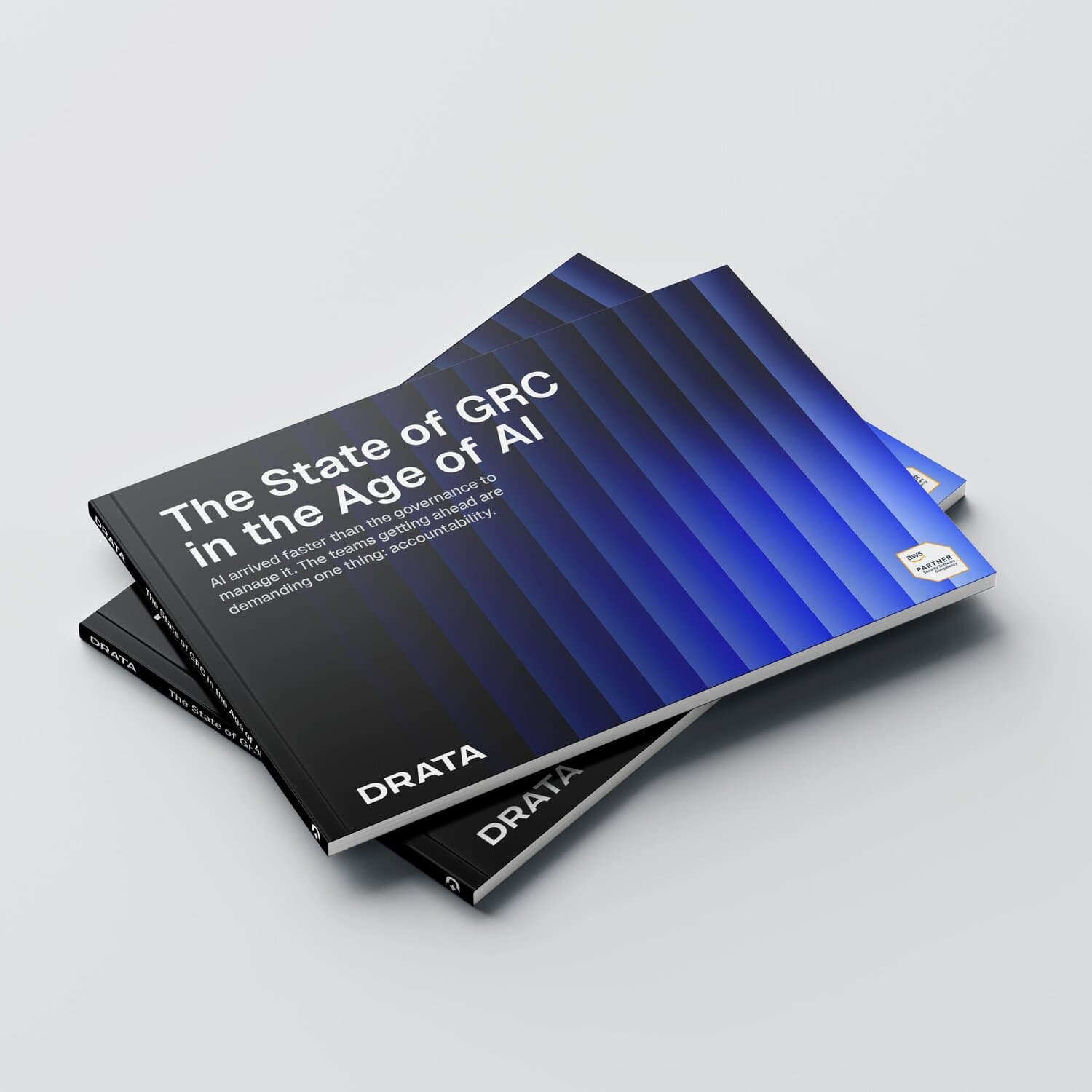
The State of GRC in the Age of AI
Only 13% of IT and security professionals are fully confident they can see every AI tool their teams use. Download The State of GRC in the Age of AI to see what 300 practitioners revealed about governing AI faster than it's outpacing them.
Why Audit Compliance Software Matters
Manual compliance processes do more damage than most organizations realize—4 out of 5 compliance leaders report that limited budgets or headcount already hinder their compliance programs. The cost isn't just the hours spent gathering screenshots and chasing down documentation. It's the gaps that form quietly between audits, the controls that drift without anyone noticing, and the audit findings that surface risks that have been growing for months.
Evolving Regulatory Requirements
The compliance landscape doesn't sit still. 85% of executives say compliance requirements have become more complex in just the last three years, and organizations must adapt quickly when requirements shift. Without automated regulatory mapping, your team is left manually tracking changes, reconciling updates against existing controls, and hoping nothing slips through.
Audit compliance software solves this by maintaining updated framework mappings and alerting teams when changes affect their control environment. The work of staying current becomes the platform's responsibility—not yours.
The Hidden Cost of Manual Audit Processes
Spreadsheets feel controllable until they aren't. Evidence lives in shared drives that aren't organized. Controls are documented inconsistently across teams. And when auditors arrive, the scramble begins.
The real cost of manual audit processes shows up in three ways: the staff hours diverted from strategic work, the human error that leads to missed evidence or inconsistent documentation, and the point-in-time nature of compliance that leaves organizations exposed between audits. Audit management software addresses all three.
Scaling Compliance Across Multiple Frameworks
Most growing organizations don't manage just one framework—they manage several simultaneously. SOC 2 for enterprise customers. ISO 27001 for international markets. HIPAA for healthcare contracts. PCI DSS for payment processing. Each adds requirements, each requires evidence, and many requirements overlap.
Audit compliance platforms support this through cross-framework control mapping. When a single control satisfies requirements across SOC 2, ISO 27001, and HIPAA at once, your team collects evidence once instead of three times. That's the kind of efficiency that transforms compliance from a bottleneck into a scalable program.
Key Benefits of Audit Compliance Software
Continuous Audit Readiness
The most significant shift audit compliance software creates is moving from reactive to continuous. Controls are monitored year-round, evidence is collected automatically, and your compliance posture reflects today's reality—not a snapshot from six months ago.
This matters most during sales cycles. Enterprise customers increasingly require SOC 2 reports or security documentation before signing contracts. With continuous readiness, your team can share an up-to-date compliance posture in hours, not weeks.
Automated Evidence Collection
Manual evidence collection is where compliance programs break down. Someone has to pull access logs, capture configuration screenshots, document policy acknowledgments, and organize it all in a format auditors can use. Multiply that across dozens of controls and multiple frameworks, and it becomes a full-time job.
Automated audit workpaper software changes this equation. Platforms with deep integrations pull evidence directly from your infrastructure—cloud providers, identity tools, developer platforms—and map it to the right controls automatically. Your team's job shifts from gathering evidence to reviewing it.
Real-Time Visibility Into Control Status
You can't manage what you can't see. Audit reporting software and compliance dashboards give teams an immediate view into which controls are passing, which are failing, and where risks are accumulating. That visibility enables proactive remediation before issues become audit findings.
The difference between knowing about a control failure during the audit and knowing about it three months earlier is the difference between a finding and a non-event.
Reduced Risk of Compliance Gaps
Control drift is one of the most common causes of audit findings. A configuration changes. An access review is missed. A vendor relationship expands without a formal assessment. These gaps compound quietly until they surface at the worst possible time.
Continuous control monitoring detects drift immediately. When a control falls out of compliance, the platform surfaces it so your team can remediate—before auditors see it, before risk accumulates, and before it affects your audit outcome.
Faster Audit Cycles and Lower Costs
External auditors bill by the hour. The longer it takes to compile evidence, respond to requests, and reconcile documentation, the higher the bill. Platforms with auditor collaboration portals—where auditors access evidence directly—compress the back-and-forth significantly.
Organizations that automate evidence collection and maintain continuous readiness routinely complete audit cycles in a fraction of the time they previously required. That translates directly to reduced external auditor fees and faster time-to-report.
Essential Features in Audit Management Software
Not all compliance platforms are built the same. These are the capabilities that separate tools that genuinely automate compliance from tools that just add another interface to manage.
Compliance Automation and Workflow Management
The best audit compliance software automates not just evidence collection but the entire workflow around it—assigning tasks, tracking ownership, sending reminders, and escalating when deadlines approach. Audit program software should function as the operating system for your compliance team, not just a place to store documents.
Look for platforms that automate recurring activities like quarterly access reviews, annual policy acknowledgments, and control attestations, so nothing falls through the cracks between audit cycles.
Evidence Collection and Document Management
Automated evidence collection is table stakes for modern compliance platforms. The question is how deep the automation goes. Does the platform pull evidence directly from your cloud environments? Does it map evidence to the right controls across multiple frameworks? Can auditors access it directly without additional formatting.
Strong automated audit workpaper software handles all of this—centralizing documentation, maintaining evidence chains, and making auditor handoff seamless.
Continuous Control Monitoring
Continuous monitoring means the platform tests controls automatically—not when you remember to check, not before audit season, but all the time. When a control fails, the platform alerts the responsible owner immediately.
This is the most important technical differentiator to evaluate. Many platforms claim "monitoring," but the depth varies significantly. Verify whether monitoring is truly automated and real-time, or whether it requires manual trigger.
Multi-Framework Support
If your organization manages SOC 2, ISO 27001, HIPAA, GDPR, and PCI simultaneously, you need a platform that treats those frameworks as a unified program—not five separate lists. Cross-framework control mapping lets you satisfy overlapping requirements once and reuse evidence across frameworks.
Evaluate how many frameworks a platform supports natively, and whether cross-mapping is built in or requires manual configuration.
Integrations With Your Tech Stack
Integration depth determines automation depth. A platform that connects to AWS, Microsoft Azure, Okta, GitHub, and Jira can pull evidence directly from where it lives. A platform with shallow integrations requires manual evidence collection regardless of what its marketing says.
When evaluating platforms, ask specifically which integrations are native versus requiring custom configuration, and whether evidence is pulled automatically or requires manual initiation.
Audit Reporting Software and Dashboards
Compliance posture needs to be visible to multiple audiences—security teams tracking daily status, leadership reviewing risk exposure, and auditors accessing evidence. Strong audit reporting software supports all three with role-appropriate views.
Executive dashboards should show current compliance status at a glance. Auditor-facing views should surface organized evidence with clear audit trails. Both should reflect real-time data, not static reports.
Scalability for Enterprise Organizations
The best internal audit management software grows with you. As your organization adds frameworks, expands to new markets, acquires companies, or scales its compliance team, the platform should accommodate that growth without requiring a replacement.
Look for platforms designed for enterprise complexity—supporting multiple business units, global frameworks, and large control libraries without degrading performance or usability.
Best Audit Compliance Software Platforms
The platforms below represent the leading options in audit compliance software for 2026. For each, we've noted their core strength and ideal use case.
Platform | Best For | Key Strength | Framework Support |
Drata | Continuous compliance at scale | Agentic AI, deep integrations, real-time monitoring | SOC 2, ISO 27001, HIPAA, PCI DSS, GDPR, and more |
Vanta | Startups and SaaS companies | Automated evidence collection, fast setup | SOC 2, ISO 27001, HIPAA, GDPR |
Secureframe | Employee-focused compliance | Onboarding, training tracking, HR integrations | SOC 2, ISO 27001, HIPAA, PCI DSS |
Optro (formerly AuditBoard) | Enterprise internal audit | Internal audit workflows, enterprise GRC | SOC 2, ISO 27001, NIST, custom |
Hyperproof | Multi-framework programs | Evidence reuse, customizable workflows | SOC 2, ISO 27001, HIPAA, GDPR, NIST |
Sprinto | Fast compliance for tech companies | Auditor-approved setups, quick time-to-audit | SOC 2, ISO 27001, HIPAA |
LogicGate | Risk-based audit programs | Flexible workflow automation, GRC | NIST, ISO 27001, SOC 2, custom |
OneTrust | Privacy-forward compliance | Data privacy, GDPR, enterprise privacy ops | GDPR, CCPA, ISO 27001, HIPAA |
Scytale | AI-driven compliance support | Tailored support, SOC 2 and ISO 27001 focus | SOC 2, ISO 27001, HIPAA, GDPR |
1. Drata
Drata is the Agentic Trust Management Platform built for organizations that need compliance to operate continuously—not seasonally. Drata unifies Automated Governance, Integrated Risk Management, Continuous Compliance, and Accelerated Security Assurance so security teams can manage trust across the entire organization, not just during audit season.
The platform's continuous monitoring engine tests controls automatically across all connected systems, flagging failures in real time so teams can remediate before issues compound. Deep native integrations with 300+ tools—including AWS, Azure, GitHub, Okta, Jira, and Slack—enable automated evidence collection directly from your infrastructure.
Drata's agentic AI capabilities go beyond basic automation. AI agents assess third-party vendor security posture, draft responses to security questionnaires, interpret risk signals, and map evidence to control requirements across frameworks—all without manual intervention.
For organizations managing multiple frameworks simultaneously, Drata's cross-framework control mapping reduces redundant work. A single control satisfying SOC 2, ISO 27001, and HIPAA requirements is documented once and mapped automatically across all three.
The Trust Center enables organizations to share their real-time compliance posture externally with customers, partners, and prospects—turning assurance into a business enabler rather than a sales bottleneck. Integrated Risk Management, Third-Party Risk Management, and Automated Governance round out a platform designed for enterprise scale.
Ideal for: Organizations seeking continuous compliance rather than point-in-time audits, enterprise teams managing multiple frameworks, and security-forward companies looking to turn trust into competitive advantage.
2. Vanta
Vanta is a compliance automation platform commonly used by startups and SaaS companies pursuing their first or second compliance certification. Its strengths are fast setup, automated evidence collection, and real-time monitoring across the major cloud frameworks.
Vanta's integration library covers the tools most SaaS companies run, and its automated testing provides ongoing visibility into control status. For organizations earlier in their compliance journey, Vanta positions itself as a strong option for the path to SOC 2 Type 2 or ISO 27001.
Ideal for: Startups, growth-stage SaaS companies, and organizations pursuing their first compliance certification.
3. Secureframe
Secureframe differentiates through its emphasis on people-side compliance—employee onboarding workflows, security training tracking, and policy acknowledgment management. For organizations where the human element of compliance (background checks, training completion, access attestations) is a primary challenge, Secureframe offers solid coverage.
Its framework support spans the major certifications, and its evidence collection is largely automated for well-integrated environments.
Ideal for: Organizations with significant employee-focused compliance requirements and growing compliance teams.
4. Optro (Formerly AuditBoard)
Optro is an enterprise GRC platform with deep roots in internal audit management. Originally built for internal audit teams managing workpapers, findings, and audit programs, it has expanded to include enterprise risk management and compliance automation.
For organizations with mature internal audit functions that need robust workflow management, workpaper organization, and findings tracking, Optro's capabilities are well-suited to the complexity of large, regulated enterprises.
Ideal for: Enterprise organizations with formal internal audit departments and complex GRC requirements.
5. Hyperproof
Hyperproof's core strength is managing multiple compliance frameworks efficiently through evidence reuse and customizable workflows. Organizations managing five or more frameworks simultaneously will find Hyperproof's cross-mapping capabilities particularly valuable.
The platform allows evidence collected for one framework to satisfy requirements in others automatically, reducing duplicated effort across complex compliance programs.
Ideal for: Organizations managing many overlapping frameworks who need strong evidence reuse and workflow flexibility.
6. Sprinto
Sprinto positions itself as the fastest path to compliance for tech companies, with pre-built, auditor-approved control sets that accelerate time-to-audit. Its opinionated approach to compliance setup—guided configurations aligned with what auditors expect—reduces the back-and-forth that can slow early compliance programs.
Ideal for: Tech startups and scale-ups looking to move from zero to SOC 2 or ISO 27001 quickly with auditor-aligned configurations.
7. LogicGate
LogicGate is a risk-based audit management software platform built around flexible workflow automation. Its strength is configurability—organizations with unique GRC processes, non-standard frameworks, or complex risk workflows can build programs that fit their specific requirements rather than adapting to rigid platform structures.
Ideal for: Organizations with mature, customized GRC programs that need flexible workflow automation.
8. OneTrust
OneTrust is a comprehensive privacy and GRC platform with particular depth in data privacy compliance—GDPR, the California Consumer Privacy Act (CCPA), and related international privacy regulations. For organizations where privacy compliance is as critical as security compliance, OneTrust offers capabilities that security-first platforms typically don't match.
Ideal for: Organizations with significant data privacy obligations, global operations processing EU citizen data, or dedicated privacy programs.
9. Scytale
Scytale offers AI-driven compliance automation with tailored support for organizations navigating their first SOC 2 or ISO 27001 certification. Its hands-on service model differentiates it from fully self-service platforms, making it a fit for teams that want more guidance throughout the compliance process.
Ideal for: Organizations seeking a more supported compliance journey, particularly for SOC 2 and ISO 27001.
How to Choose the Right Audit Management System Software
Selecting an audit compliance platform is a significant decision. These five criteria will help you cut through the marketing and evaluate what actually matters.
1. Define Your Framework Requirements
Start with the frameworks you need—today and in the next 18 to 24 months. SOC 2 for enterprise sales. ISO 27001 for international expansion. HIPAA for healthcare customers. PCI DSS for payment processing. The platform you select should support all of them natively, with active maintenance as frameworks evolve.
Avoid platforms that offer frameworks as add-ons requiring manual configuration—this creates exactly the fragmented compliance environment you're trying to escape.
2. Evaluate Automation Depth
"Automated compliance" is used loosely in this market. Dig into what's actually automated: Is evidence collection triggered automatically or manually? Does monitoring run continuously or on a schedule? Are control tests written and maintained by the platform, or do you write them yourself?
The most valuable automation replaces the work your team was doing manually. If a platform automates tasks you weren't doing anyway, it's not actually reducing your workload.
3. Assess Integration Capabilities
Your tech stack determines what evidence collection is possible. A platform with native, deep integrations to your cloud infrastructure, identity provider, source control, and ticketing system can collect most of your evidence automatically. A platform with shallow or missing integrations puts that burden back on your team.
Request a specific list of native integrations and ask how evidence is collected from each—automatic polling, webhook triggers, or manual upload.
4. Consider Scalability for Multi-Framework Compliance
The platform that works well for one framework may struggle with five. Before committing, understand how the platform handles cross-framework control mapping, evidence reuse, and the additional volume that comes with a mature compliance program.
Ask about organizations managing a similar number of frameworks to yours and what their experience has been as their programs scaled.
5. Review Vendor Reputation and Customer Support
Implementation support and ongoing customer success matter more than most buyers anticipate. Compliance programs hit complexity during setup, during audits, and when regulations change. A vendor with strong implementation support and responsive customer success makes those moments manageable.
Evaluate G2 reviews, case studies from organizations similar to yours, and specifically ask about the support experience during your first audit cycle.
How AI Is Transforming Internal Auditing Software
AI is moving from a marketing claim to a functional reality in audit compliance software—generative AI use in audit activities doubled over the past year according to The IIA. The difference between genuine AI capability and buzzword-level implementation is significant.
Here's where AI is creating measurable value in modern compliance platforms:
- Automated evidence mapping: AI matches collected evidence to control requirements across frameworks, eliminating the manual work of determining what satisfies what—and flagging gaps when evidence is insufficient
- Intelligent risk assessment: AI interprets risk signals from across the control environment, prioritizes the risks that matter most, and surfaces them for human review rather than requiring manual analysis
- Questionnaire automation: Security questionnaires—the RFPs, vendor assessments, and customer due diligence requests that compliance teams spend significant time on—can be drafted automatically by AI trained on your compliance posture
- Third-party risk assessment: AI evaluates vendor security documentation, scores risk exposure, and identifies gaps in third-party posture without requiring your team to manually review every assessment
The most advanced implementations go further—agentic AI systems that take action on behalf of compliance teams, not just surface information for them. As AI capabilities mature, the distinction between "compliance software" and "autonomous compliance operations" is narrowing quickly.
For organizations evaluating platforms, the right question isn't whether a platform has AI—it's whether that AI reduces the work your team does, or just the work you were never doing anyway.
Build Continuous Trust With Drata
Trust can't be a point-in-time exercise. Your customers need assurance continuously—not just when an audit is complete. Your risk posture changes every day. Your controls either hold or they don't, and you need to know which in real time.
Drata's Agentic Trust Management Platform builds continuous trust across your organization—monitoring controls automatically, interpreting risk signals, collecting evidence across 300+ integrations, and sharing your compliance posture externally through the Trust Center. The result is a compliance program that runs year-round, not just during audit season.
FAQs About Audit Compliance Software
What Is the difference between audit management software and compliance automation?
Audit management software primarily focuses on internal audit workflows—organizing workpapers, tracking findings, and managing audit programs. Compliance automation platforms go further, monitoring controls continuously and automating evidence collection for external audits like SOC 2, ISO 27001, and HIPAA.
The two categories are converging in enterprise-grade platforms, but the emphasis differs: audit management software is built around audit program operations, while compliance automation is built around continuous control readiness.
How long does it take to implement audit compliance software?
Implementation timelines vary based on organization size, existing tech stack complexity, and the number of frameworks being configured. Most organizations with standard cloud environments and straightforward integration requirements can be operationally live within a few weeks.
Larger enterprises with complex environments or custom integrations typically see longer timelines. The most significant variable is usually internal: how quickly your team can complete the initial scope definition, integration setup, and control configuration.
Can audit compliance software replace external auditors?
No. Audit compliance software streamlines preparation and automates evidence collection, but certified external auditors still conduct the official examination and issue attestation reports. For frameworks like SOC 2, an independent Certified Public Accounting (CPA) firm must perform and attest to the audit—no software changes that requirement.
What the right platform does is make the auditor's job easier and faster by providing organized, complete evidence with a clear audit trail—which reduces billable hours and shortens the overall audit timeline.
What Is the most popular audit software for SOC 2 compliance?
Drata, Vanta, and Secureframe are three of the most commonly used platforms for SOC 2 compliance automation, primarily due to their continuous monitoring, automated evidence collection, and native integrations with the cloud and SaaS tools most technology companies use. Each has a different emphasis: Drata on continuous compliance at enterprise scale, Vanta on fast startup adoption, and Secureframe on employee-side compliance workflows.
How do organizations measure ROI on audit compliance software?
The clearest ROI signals come from four areas: reduced audit preparation time (hours reclaimed from manual evidence gathering), lower external auditor fees (shorter audit cycles mean fewer billable hours), faster sales cycles (demonstrating compliance faster reduces the time between security review and contract close), and decreased risk exposure (catching control failures before audits prevents costly findings and remediation).
For most organizations, the combination of staff time saved and reduced external audit costs alone justifies the investment within the first audit cycle.