Ask a security leader a simple question—what AI agents are running in my organization?—and the honest answer is usually a pause. Most know agents are out there. Few can say how many, who owns them, or what each one is allowed to touch. That gap between "we think we have a few" and "we actually have hundreds" is exactly where the risk lives.
AI agents are software that can take autonomous actions on behalf of a person or a system. They read data, call other tools, and make decisions, often without a human in the loop. They are spreading across the enterprise faster than anyone is tracking them, and discovery is the first step toward bringing them under control.
This guide walks through the full journey: why discovery matters, what kinds of agents to look for, how to find them, how to build an inventory, and how to govern and monitor what you uncover. Together, these steps turn a blind spot into a system you can trust.
Why AI Agent Discovery Is Critical for Your Organization
You cannot govern what you cannot see. Every policy, control, and audit assumes the agent is already known, documented, and operating inside a defined boundary. The moment an unknown agent appears, that assumption breaks, and governance fails quietly because the controls were never applied.
The scale of the blind spot is real. In one 2026 enterprise survey from the Cloud Security Alliance, 82% of organizations reported discovering at least one AI agent or workflow that security or IT did not previously know about. Ungoverned agents create concrete exposure across several dimensions:
- Compliance gaps: Untracked agents can violate regulatory requirements without anyone noticing.
- Data exposure: Agents often reach sensitive information with permissions no one scoped.
- Security vulnerabilities: Unmonitored AI widens your attack surface and outlives the session that created it.
- Regulatory penalties: Emerging frameworks increasingly demand evidence that AI is accountable and controlled.
Trust in this environment cannot be a once-a-year exercise. It demands continuous compliance—maintained daily, not rebuilt for every audit. Discovery is where that continuous trust begins.
Explore the Future of AI Agent Governance with Drata
Get hands-on with our limited availability platform, in development with select enterprises.
What Types of AI Agents Run in Organizations
Before we can find agents, we need to know what we are looking for. AI agents arrive through many doors, and each category hides in a different place. Understanding the types helps teams recognize what already exists in their environment.
Embedded AI Assistants
These are AI features built directly into software your teams already use, such as Microsoft Copilot, Salesforce Einstein, and Google Workspace AI. They activate automatically when employees open familiar tools, which makes them easy to overlook precisely because they feel like part of the furniture.
Autonomous Task Agents
These agents execute multi-step workflows on their own, including scheduling, data processing, and report generation. Once deployed, they operate with minimal human input, which is what makes them powerful and what makes them risky.
Third-Party AI Integrations
Many vendor tools and software-as-a-service (SaaS) platforms now ship AI capabilities inside the products you already buy. Organizations often inherit these agents without realizing it, simply by adopting new software or accepting a routine update.
Custom-Built AI Agents
Engineering and data teams build proprietary agents for specific business processes, often wired directly into internal systems through an application programming interface (API). These are typically known to their creators but invisible to security and governance teams.
Shadow AI and Unauthorized Agents
Shadow AI refers to AI tools adopted by employees without IT approval. Between one-fifth and one-third of workers use AI outside IT governance, because the barrier to entry is almost zero: a free trial, a browser extension, or a personal API key is all it takes. And it is the new shadow IT, except worse—IBM found shadow AI breaches cost $670,000 more per incident. A rogue SaaS tool mostly sits idle until someone logs in. A rogue agent is already acting—reading data, calling APIs, and taking actions—on permissions nobody scoped and nobody is watching.
Agent Type | Common Examples | Discovery Difficulty |
Embedded AI Assistants | Microsoft Copilot, Salesforce Einstein | Low, visible in licensed software |
Autonomous Task Agents | Workflow automation bots, custom agents | Medium, requires a workflow audit |
Third-Party AI Integrations | Vendor tools with AI features | Medium, check vendor documentation |
Custom-Built AI Agents | Internal bots, machine learning models | Low, check with engineering teams |
Shadow AI | ChatGPT, browser extensions, free AI tools | High, requires employee surveys |
Why Organizations Struggle to Track AI Agents
The problem is rarely a lack of effort. Teams want visibility, but the structure of modern AI adoption works against them. Recognizing these obstacles helps explain why "mostly visible" is the norm and why it is not good enough for autonomous actors.
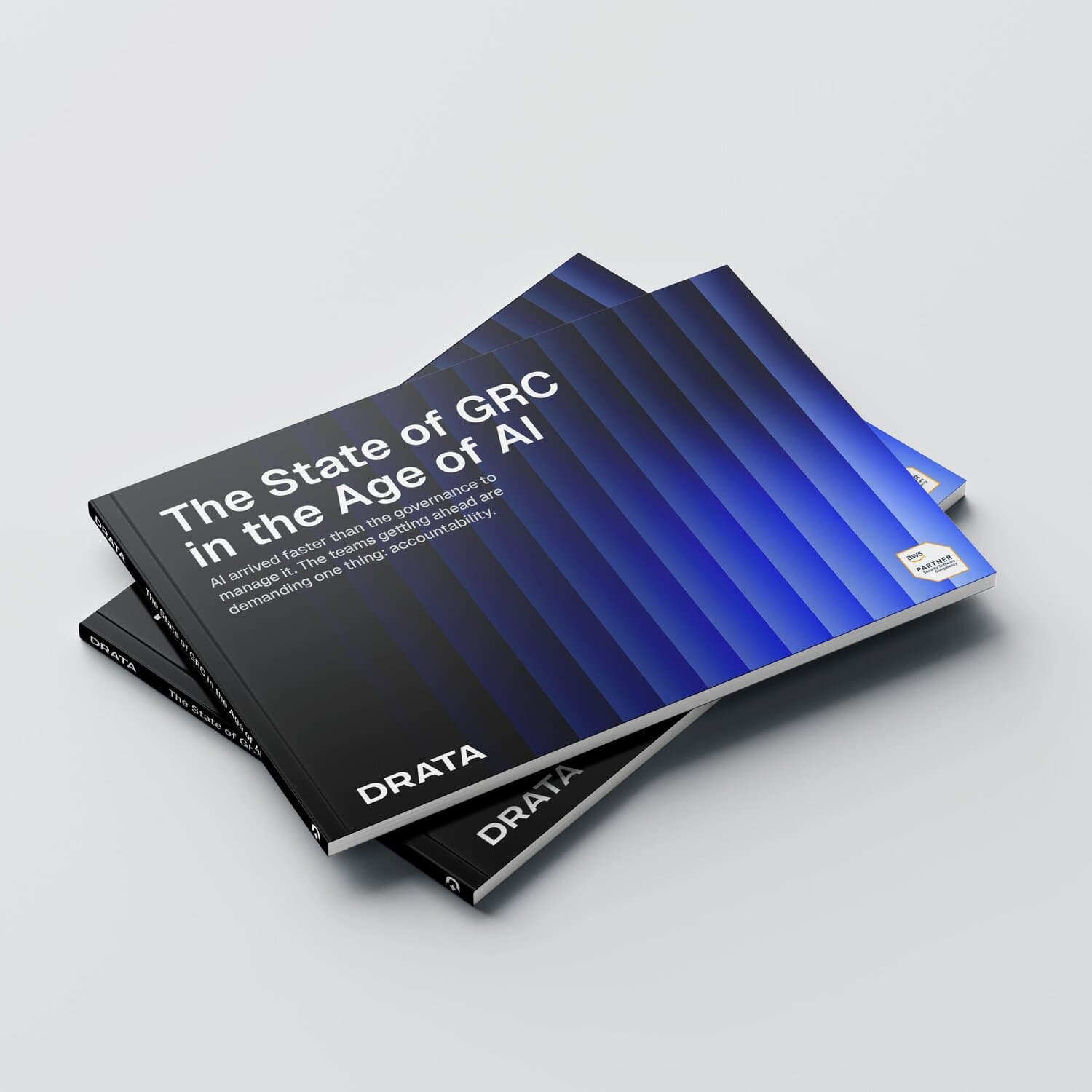
The State of GRC in the Age of AI
Only 13% of IT and security professionals are fully confident they can see every AI tool their teams use. Download The State of GRC in the Age of AI to see what 300 practitioners revealed about governing AI faster than it's outpacing them.
Decentralized AI Adoption
Different departments adopt AI independently. Marketing, sales, human resources, and engineering each make their own decisions, and no single team holds the full picture of what the organization is running.
Lack of Centralized Visibility
Most organizations have no single system that shows every active agent. Traditional asset management tools were built for laptops and servers, not for autonomous software that spins up through a connector and acts at machine speed.
Rapid Proliferation Outpacing Governance
AI adoption moves faster than policy. With 40% of enterprise apps predicted to embed AI agents by end of 2026, governance frameworks predicted to embed AI agents by the end of 2026, governance frameworks lag behind, and the gap between what exists and what is governed widens with every passing month.
Third-Party AI Embedded in Vendor Tools
Vendors add AI features without explicit notification, and a single software update can introduce new capabilities overnight. The agent's vendor can also be breached, or its access scopes can quietly expand, changing the risk profile without any action on your side.
How to Discover AI Agents in Your Organization
This is the heart of the work, and the area most guides skip. No single method surfaces every agent, so we recommend running these five approaches in parallel and mapping their combined coverage. Here is a practical sequence any team can start this week.
1. Audit Your Software and SaaS Stack
Start with a complete inventory of every application in use. Check each one for AI features, because many tools now include agents by default. License records, expense reports, and single sign-on logs are good starting points for building the list.
2. Review API Connections and Integrations
APIs often reveal agents operating quietly between systems. Examine authentication logs and integration platforms to see which services are calling which, and look for connections that no current owner can explain.
3. Analyze Network Traffic and Data Flows
Monitor outbound traffic to known AI service endpoints, such as Anthropic, OpenAI, and Google. Traffic flowing to an inference endpoint that no one approved is one of the clearest signals of unauthorized AI usage.
4. Survey Departments and Teams
Ask employees directly what they use. Many shadow AI tools never appear in logs, so a straightforward survey often surfaces what technical scans miss. A few useful questions include:
- What AI tools do you use daily for work tasks?
- Have you signed up for any AI services using your work email?
- Do you use browser extensions with AI capabilities?
5. Check Third-Party Vendor Disclosures
Review vendor contracts, privacy policies, and Trust Centers for AI disclosures. Many vendors now document AI features in their terms of service, and folding these checks into your Third-Party Risk Management process keeps the list current.
This is also where centralized tooling earns its place. The Drata Sensor sits inline and registers every agent at inception, mapping each one to its owner, identity, permissions, and scope, so teams get a full inventory in minutes instead of assembling one by hand.
How to Create an AI Agent Inventory
Discovery produces a list. An inventory turns that list into something you can act on. The goal is a current, connected record of every agent and what it can do. Capture the following for each one.
Document Agent Purpose and Scope
Record what each agent does, which business processes it supports, and what outcomes it produces. A clear purpose statement makes it far easier to judge whether an agent's behavior later drifts from its intent.
Map Data Access and Permissions
Identify what data each agent can reach, what systems it connects to, and what actions it can take on its own. This map is the foundation for every risk decision that follows.
Classify Agents by Risk Level
Assign a risk category based on data sensitivity, autonomy, and regulatory exposure. A simple tiering keeps attention where it belongs:
- High risk: Accesses personal data, makes financial decisions, or operates in regulated domains.
- Medium risk: Automates internal workflows with limited data access.
- Low risk: Productivity assistants with no sensitive data access.
Assign Ownership and Accountability
Every agent needs an owner responsible for its governance, updates, and compliance within a clear AI risk management framework. Manual, spreadsheet-based inventories drift the moment they are saved, which is why teams increasingly automate evidence collection to keep records accurate as the environment changes.
How to Govern AI Agents Effectively
Governance is a continuous discipline, not a one-time project. Once you can see your agents, the work shifts to deciding what each is allowed to do and enforcing it. These practices, applied with automation and human oversight, hold up at machine speed—the core challenge of governing AI agents.
Understand Each Agent's Full Footprint
Know not just what an agent does, but what it accesses, what it produces, and how it interacts with other systems. Function is the headline; footprint is the full story, and the full story is where risk hides.
Establish Guardrails and Boundaries
Set explicit limits on what agents can and cannot do, and build those constraints into the agent's configuration rather than a policy document no one reads. Define the intent plainly: this class of agents can read from these systems, write to those, and must never touch these.
Treat Agent Updates as Controlled Changes
An update can change an agent's behavior significantly. Apply real change management to updates, not just routine patching, so a behavior shift never slips into production unreviewed.
Conduct Regular Agent Performance Reviews
Review outputs, accuracy, and behavior on a set cadence. Look for drift, bias, or unexpected actions, and treat the review as you would a performance check for any actor with real responsibility.
Build an Incident Response Plan
Prepare a playbook before an agent causes a problem. Know how to disable, isolate, and investigate an agent quickly, because the time to figure that out is not during an active incident.
Track Agent Versions and Changes
Maintain a version history for every agent so you always know what is running. That record supports both troubleshooting and audits, and it closes a gap most organizations only notice when someone asks.
How to Monitor AI Agents Continuously
Point-in-time approval cannot keep up with actors that run continuously and act faster than any review cycle. Monitoring is what keeps governance honest between audits. The aim is to catch a problem the moment it happens, not in next quarter's review.
Automate Control Monitoring
Manual spot-checks do not scale to dozens or hundreds of agents. Continuous control monitoring verifies that agents operate within their defined boundaries, which is the only realistic way to maintain control as the environment grows.
Set Alerts for Anomalous Behavior
Configure alerts for deviations from expected patterns, such as unusual data access, unexpected outputs, or performance degradation. The faster an anomaly surfaces, the smaller the blast radius.
Review Agent Activity Logs Regularly
Activity logs are your evidence of agent behavior. Review them on a schedule and preserve them for compliance, since a complete log is what lets you reconstruct exactly what happened and when.
Integrate Monitoring with Your GRC Platform
Connect agent monitoring to your governance, risk, and compliance (GRC) platform for centralized visibility and reporting. With Drata's Agentic Trust Management Platform, Drift Detection flags the moment an agent steps outside its approved scope, and Mission Control can enforce policy inline, before an action executes rather than after the fact. For autonomous agents, notification alone is not governance.
How AI Agent Governance Connects to Compliance Frameworks
AI governance does not stand apart from your existing obligations. It maps directly onto frameworks your auditors and customers already know. Here is how discovery and inventory feed the standards that matter most.
ISO 42001 and AI Management Systems
ISO 42001 is the emerging international standard for AI management systems, which is a structured way to govern how an organization builds and runs AI. Pursuing it requires a comprehensive, current inventory of every AI agent in scope.
SOC 2 and AI Controls
System and Organization Controls 2 (SOC 2) audits increasingly examine AI governance. Auditors want evidence that agents are inventoried, monitored, and controlled, and that evidence has to be more than a screenshot taken the week before fieldwork.
GDPR and AI Data Processing
The General Data Protection Regulation (GDPR) applies whenever an agent processes personal data. Discovery is essential for demonstrating lawful processing, and the same logic extends to the European Union Artificial Intelligence Act (EU AI Act), whose enforcement carries penalties of up to seven percent of global revenue.
Drata is built to map agent activity to the frameworks that govern AI, including SOC 2, ISO 27001, ISO 42001, the NIST AI Risk Management Framework (NIST AI RMF), the EU AI Act, and AIUC-1. Because the evidence flows from one platform, you show auditors the same kind of proof they already trust, extended to AI agents.
Turn AI Agent Discovery into Continuous Trust
Discovery is not the finish line. It is the foundation for a state of continuous trust, where you can answer the questions your board, auditors, and customers are already starting to ask. The challenge is no longer whether agents are running. It is whether you can see them, govern them, and prove it.
This is the shift Drata is built for. Drata discovers every agent in your environment, including the shadow AI no one knew was running, enforces your policies before an action executes, and logs every decision in a tamper-evident Chain of Custody mapped to your frameworks. Roughly 90% of companies cannot answer how their AI agents are governed today, and only about one in ten can prove an audit trail for AI agent decisions. Closing that gap is how trust becomes a procurement advantage instead of a deal blocker.
As Tolga Erbay, VP of GRC and Privacy at Dropbox, put it: "Over the past few months, we've seen an entire new category emerge around which AI agents are running and how we are governing them, and answering those questions with 100% confidence is impossible with today's technology. Anyone who solves that problem is solving for where enterprise trust is going in the very near future."
Built on the same Agentic Trust Management Platform that more than 8,500 customers already rely on to prove compliance, this is the next dimension of trust. Apply for Early Access to start governing every AI agent in your enterprise.
FAQs about AI Agent Discovery
What is shadow AI and why is it a risk?
Shadow AI refers to AI tools that employees adopt without IT approval, from browser extensions to free chatbots to scripts using personal API keys. It creates risk because these agents operate outside your governance controls and can access sensitive data with no oversight, often acting autonomously before anyone knows they exist.
How often should I audit AI agents in my organization?
Continuous monitoring beats periodic audits, because agents change behavior between review cycles. At a minimum, we recommend quarterly reviews, plus a fresh discovery pass whenever new software is deployed or a major vendor update ships.
Can AI agent governance be automated?
Yes. Platforms automate much of the discovery, inventory, and monitoring work, which improves accuracy and keeps governance in step with rapid AI adoption. Automation handles the repeatable work while people stay responsible for decisions, boundaries, and outcomes.
What should an AI agent policy include?
An effective policy covers inventory requirements, risk classification criteria, ownership assignments, update and change procedures, and an incident response plan. It will also define what each class of agent is allowed to access and the evidence required to prove those rules are working.
How do I handle third-party AI agents in vendor tools?
Review vendor contracts and Trust Centers for AI disclosures, and fold AI governance requirements into your vendor assessments and Third-Party Risk Management process. Because a vendor's AI can change with a routine update, treat third-party agents as a continuous risk to monitor, not a one-time review.