Someone in your company spun up an AI agent last week. Maybe a sales rep connected an assistant to your CRM to handle prospect research. Maybe an engineer wired one into an internal API. Maybe a vendor shipped one inside a product you already pay for. You probably did not approve it, and you may not even know it is running.
If you have ever asked “who is running AI agents in my organization?” and come up short, you are not alone. Most security and GRC leaders know agents are operating somewhere in their environment. Far fewer can say how many exist, who owns them, or what each one can touch — only 21% maintain a real-time inventory of their AI agents. That gap between “we think we have a few” and “we actually have dozens” is exactly where the risk lives.
This guide walks through how to find the AI agents already running in your organization, how to build an inventory you can trust, and how to monitor and govern them continuously, so you can answer the questions your board, auditors, and customers are already starting to ask.
What Are AI Agents
An AI agent is an autonomous software system that uses artificial intelligence to complete tasks, make decisions, and take actions on behalf of a user or organization. Unlike a chatbot or a simple automation script, an agent does not just respond and stop. You give it a goal, and it figures out the steps, accesses the systems it needs, and keeps working until the job is done.
That autonomy is the key difference. Traditional automation follows fixed rules. An AI agent reasons, adapts, and acts. Most agents share a few defining characteristics:
- Autonomy: They operate without constant human direction.
- Goal orientation: They pursue objectives across multiple steps.
- Tool use: They connect to APIs, databases, and other systems to get things done.
- Memory: They retain context across interactions.
It helps to separate three terms that often get used interchangeably. An AI tool, like a standalone chatbot, waits for you and answers one prompt at a time. An AI assistant helps with tasks but keeps a human in the loop. An AI agent acts on your behalf, often without anyone watching. The further right you move on that spectrum, the more independence the system has, and the more governance it requires.
Explore the Future of AI Agent Governance with Drata
Get hands-on with our limited availability platform, in development with select enterprises.
Why Shadow AI Agents Create Security and Compliance Risks
Here is the uncomfortable part: most of these agents arrived without IT or security ever signing off. Teams adopt them to move faster, and no procurement gate stands in the way. McKinsey found that 62% of organizations are experimenting with AI agents, with far fewer having scaled governance to match. The result is "shadow AI," the next evolution of shadow IT, and in some ways a harder problem. IBM found that shadow AI added $670,000 to average breach costs.
A rogue SaaS tool mostly sits there until someone logs in and uses it. A rogue agent is already acting, reading data, calling APIs, and taking actions on permissions nobody scoped, at machine speed and without a human in the loop. Ungoverned agents do not just add risk once. They compound it over time. The categories below show where that risk concentrates.
The State of GRC in the Age of AI
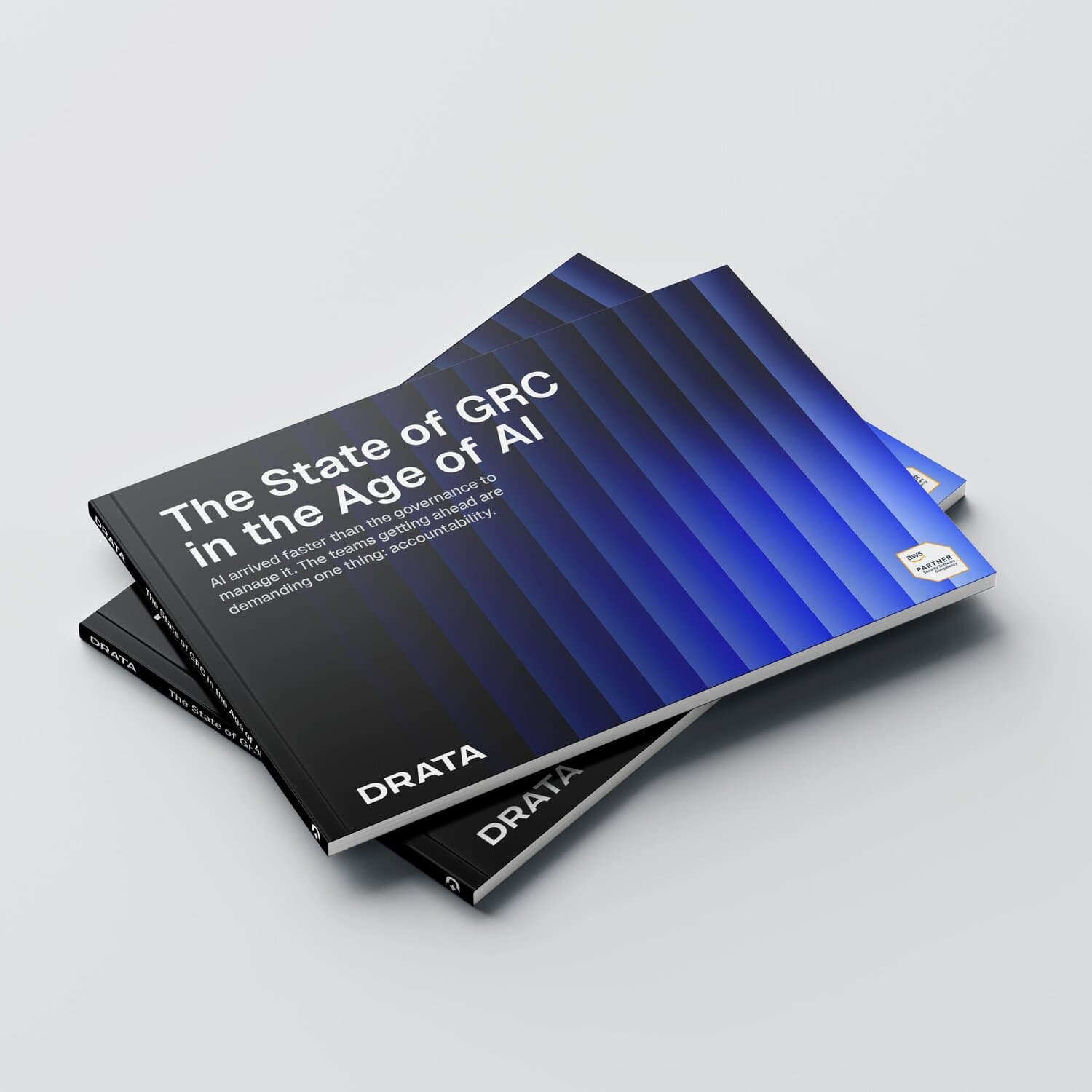
Only 13% of IT and security professionals are fully confident they can see every AI tool their teams use. Download The State of GRC in the Age of AI to see what 300 practitioners revealed about governing AI faster than it's outpacing them.
Uncontrolled Data Access and Privacy Exposure
AI agents often reach sensitive data to do their work, including customer information, financial records, and intellectual property. Because many agents send prompts and context to external AI providers, that data can leave your environment without any control or logging in place. An agent built to “summarize support tickets” may quietly be transmitting customer details to a third-party model, and no one decided that was acceptable.
Authentication and Permission Sprawl
Agents need credentials, and they tend to accumulate broad ones. API keys, OAuth grants, and service accounts pile up across systems, each a standing door into your data. When an employee leaves or an agent is abandoned, those credentials often linger as orphaned access nobody owns or remembers. Regular access reviews should cover agent credentials alongside human ones. The more agents you run, the wider that attack surface grows.
Compliance Gaps and Audit Failures
Auditors increasingly expect you to identify, document, and control the in-scope systems that access sensitive data. Ungoverned agents create blind spots across the assurance programs and regulations you answer to, including SOC 2, ISO 27001, GDPR, ISO 42001, and the EU AI Act. If you cannot show what an agent accessed and why, you cannot demonstrate control, and that turns into findings.
Unclear Accountability and Ownership
When no one owns an agent, no one is responsible when it misbehaves. Incidents need a clear owner to drive response and remediation. Without assigned accountability, a misfiring agent becomes a game of organizational hot potato while the damage continues.
How to Discover AI Agents Running in Your Organization
You cannot govern what you cannot see, so discovery is the first move. Assume you have more agents operating than you think. The gap between what teams believe they have and what is actually running is usually wide, and it is where the risk lives. Work through these methods in order of impact.
1. Audit Cloud and SaaS Integrations
Start where agents are easiest to spawn. Review OAuth connections, third-party app permissions, and marketplace installations across Microsoft 365, Google Workspace, Slack, and Salesforce. Most agents your teams built or connected will show up in one of these consoles, if someone is looking. Pay attention to apps with broad read or write scopes and to connections nobody can immediately explain.
2. Review API Connections and Authentication Logs
Examine your API gateway logs, service account activity, and authentication records for patterns that signal agent behavior, such as high-frequency, automated calls outside business hours. Watch for traffic to common AI provider endpoints, including Anthropic (Claude), OpenAI, Google Vertex AI, and AWS Bedrock. Repeated programmatic access from a single credential is a strong tell.
3. Survey Business Units and Teams
Discovery is not only technical. Run a short cross-functional survey to surface tools teams adopted on their own. Keep the questions plain and non-punitive so people answer honestly:
- What AI tools do you use daily?
- Have you connected any AI assistants to company systems?
- What tasks have you automated using AI?
You will often learn about agents that never touched a procurement form.
4. Analyze Network Traffic for AI Endpoints
Network monitoring can reveal connections to AI provider APIs that indicate agent activity, even when those agents were never registered anywhere. Outbound calls to model endpoints, especially recurring ones, point to automated systems acting on a schedule rather than a person clicking a button.
5. Check Procurement and Expense Records
Finally, follow the money. Review credit card statements and expense reports for AI subscriptions that skipped formal procurement. A recurring charge for an AI platform on a team’s corporate card is often the first visible trace of an agent that has been running for months.
What to Include in an AI Agent Inventory
Discovery only matters if it leads to documentation. A complete inventory is the foundation for everything that follows. At minimum, capture these fields for every agent you find:
Inventory Field | Description | Example |
Agent Name | Identifying name of the AI agent | Sales Copilot Bot |
Owner | Person or team responsible | Revenue Operations |
Data Access | What data the agent can read or modify | CRM records, customer emails |
Permissions | Authentication scope and privileges | Read/write Salesforce, read Gmail |
Risk Level | Classification based on access and impact | High |
Agent Identity and Owner
Give every agent a clear name and a single human owner. Naming conventions and documented ownership turn an anonymous process into something accountable. The rule is simple: no agent without an owner.
Data Access and Permissions
Record exactly what data classifications the agent can reach and what scopes it holds, both read and write. Write access is where the real risk sits, because an agent that can modify records or send communications can cause harm, not just leak information.
Actions and Capabilities
Document what the agent can actually do: send messages, modify records, execute transactions, or make decisions. Two agents with identical data access can pose very different risks depending on what actions they are allowed to take.
Integration Points and Dependencies
Map every system, API, and data source the agent connects to, along with its upstream and downstream dependencies. This is the agent’s footprint, and it is what determines your real exposure if something goes wrong.
Risk Classification Level
Classify each agent by data sensitivity, autonomy, and business impact so you know where to focus first:
- Low risk: Read-only access to non-sensitive data.
- Medium risk: Access to internal business data with limited actions.
- High risk: Access to customer data, financial systems, or autonomous decision-making.
- Critical risk: Actions with regulatory, legal, or safety implications.
This is the point where many teams reach the limits of a spreadsheet. Because agents are created and changed constantly, a manual inventory is stale almost as soon as it is finished. Platforms built for this problem help here. Drata’s AI Agent Governance, now in early access, uses the Drata Sensor to discover and register every agent at inception, mapping each one to its owner, identity, permissions, and scope, so the inventory builds and updates itself rather than depending on a quarterly audit.
How to Monitor AI Agents Continuously
A point-in-time assessment fails for one simple reason: agents change. They run continuously, outlive the session that created them, and shift behavior as scopes expand and vendors update their APIs. Continuous monitoring is what keeps your inventory honest and your trust intact.
Track Agent Behavior and Activity Patterns
Log what each agent does, how often it acts, and how it interacts with systems. Establish a baseline of normal behavior so anomalies stand out. A sudden spike in activity or a new action type is worth a look.
Monitor Data Access and Outputs
Watch what data agents read, process, and generate. AI outputs are a real exfiltration path, since an agent can summarize and forward sensitive information in ways traditional data-loss tools miss. Monitoring outputs, not just inputs, closes that gap.
Detect Drift and Anomalies
Agent behavior drifts. OAuth scopes expand, a vendor changes an API, or someone tweaks a prompt, and the agent you approved is no longer the agent that is running. Indicators of drift include new data access patterns, unexpected integrations, and changed outputs. This is exactly the kind of oversight that benefits from automation: Drata monitors agent activity continuously, and Drift Detection flags the moment an agent operates outside its approved scope, so you catch the change in real time instead of at the next review.
Maintain Version Control and Change Logs
Treat agent updates like product releases, not minor patches. Document every change to configuration, permissions, and capabilities, and keep a record of which version is running where. When something breaks, a clear change log is the difference between a fast rollback and a long investigation.
How to Govern AI Agents Across Your Organization
Monitoring tells you what happened. Governance decides what is allowed to happen in the first place. The most effective governance programs enforce policy before an action runs, because for autonomous actors operating at machine speed, notification is not governance.
Define Boundaries and Guardrails
Establish what agents can and cannot do through technical controls, not just written policy. Set data access limits, action restrictions, and human-approval requirements. Tools like Drata Mission Control let teams define policies as plain-language intent rather than code, then evaluate every action against approved policy and block violations inline before they execute. The Trust Ladder lets teams prove a policy against real traffic before they turn enforcement on.
Assign Clear Ownership and Accountability
Spell out who approves an agent’s deployment, who monitors its behavior, and who responds when it fails. Every agent should map back to a human identity, and remember that one person can spawn many agents with different scopes, so accountability has to follow each one.
Establish Agent Lifecycle Management
Govern the full lifecycle: procurement, deployment, operation, updates, and decommissioning. Agents need formal offboarding the way employees do. An abandoned agent with live credentials is a standing risk long after anyone remembers building it.
Develop Incident Response Procedures
Build response plans specific to agent failures and misuse. Cover how you will isolate an agent, roll back its actions, and notify stakeholders. Have the plan before you need it, not during the incident.
Conduct Regular Agent Performance Reviews
Review agents the way you review employees. Check effectiveness, accuracy, and compliance on a regular cadence, and retire or retrain the ones that are not earning their access.
How AI Agent Governance Supports ISO 42001 and Compliance Frameworks
Strong agent governance does more than reduce risk. It strengthens your formal compliance posture. ISO 42001 is a management-system standard for governing AI across the organization, and AI agents are one class of AI system that belongs inside that program. Proper governance demonstrates the control over automated systems that auditors increasingly expect, because an agent’s footprint, not its architecture, determines your obligations. A complete inventory and continuous monitoring are exactly what regulators and auditors want to see.
The same governance work supports the standards, frameworks, and regulations you already answer to. It can strengthen evidence and control alignment for attestation and certifiable standards like SOC 2, ISO 27001, and ISO 42001, and it helps you operationalize requirements tied to regulations and guidance such as HIPAA, the NIST AI RMF, and the EU AI Act. Rather than standing up a separate AI compliance program, you can extend the one you have. Drata’s Chain of Custody logs every decision in a tamper-evident record mapped to the frameworks you already report against, on the same Agentic Trust Management Platform that 8,500+ customers already use to prove compliance. This isn’t a pivot. It’s the next dimension of trust.
It is a pressing gap. Today, roughly 90% of companies cannot answer how their AI agents are governed, and only about one in ten can prove an audit trail for AI agent decisions. As Tolga Erbay, VP of GRC and Privacy at Dropbox, put it: “Over the past few months, we’ve seen an entire new category emerge around which AI agents are running and how we are governing them, and answering those questions with 100% confidence is impossible with today’s technology. Anyone who solves that problem is solving for where enterprise trust is going in the very near future.”
How to Start Managing AI Agent Risk
You do not need a perfect program to make real progress. You need to start. The path forward is practical:
- Begin with discovery. Audit your environment this week using the methods above.
- Assign ownership. Put AI governance under a named team, usually security or GRC.
- Build an inventory and classify by risk. Know what you have and where the highest exposure sits.
- Implement continuous monitoring. Move from point-in-time snapshots to real-time visibility.
Organizations ready to bring their AI agents under governance can apply for early access to Drata’s AI Agent Governance to see how discovery, inline enforcement, drift detection, and auditor-grade evidence come together to manage AI risk at scale.
FAQs about AI Agent Governance
Who is responsible when an AI agent causes a compliance violation?
The organization remains responsible for all compliance obligations regardless of whether a human or an AI agent caused the violation. That is exactly why assigning a clear owner to every agent and maintaining governance controls over each one is essential.
What is the difference between AI agents and traditional automation?
AI agents use artificial intelligence to make decisions, adapt to new situations, and operate with real autonomy. Traditional automation follows fixed rules and scripts without reasoning or learning, so its behavior is predictable in a way an agent’s is not.
How often should organizations update their AI agent inventory?
Continuous monitoring beats periodic reassessment, because agents can change capabilities, permissions, and integrations at any time without formal notice. A quarterly review will miss drift that happens daily, so automated, ongoing tracking is the more reliable approach.
What are warning signs that AI agents are operating without governance?
Common indicators include unknown API connections to AI providers, unexplained data transfers, employees using AI tools that IT never approved, and audit findings that reveal undocumented automated processes. Any one of these is a signal to start a discovery effort.