AI agents are now logging in, calling APIs, and moving data across your environment, and most security teams cannot say how many are running or what each one can reach. AI identity security closes that gap by giving teams visibility, control, and proof. This guide explains what the term means, why it matters now, how autonomous agents break traditional identity models, and the practical steps you can take to govern every identity in your environment, including the non-human ones.
What Is AI Identity Security
AI identity security is the practice of managing and protecting digital identities in an environment where artificial intelligence sits on both sides of the equation. It covers two distinct but connected ideas, and strong programs address both at once.
- Identity security by AI: Using machine learning to monitor access behavior, automate provisioning, and detect threats faster than human teams can review them.
- Identity security for AI: Securing the autonomous AI agents that now act on your network, hold real permissions, and make decisions without a human approving each step.
A few foundational terms make the rest of this guide easier to follow. Identity and Access Management, or IAM, is the discipline of controlling who and what can access systems and data. Non-human identities, or NHIs, are digital identities that do not belong to a person, such as service accounts, API keys, and AI agents. Agentic AI refers to systems that take actions on their own toward a goal rather than waiting for a human to direct every move. If you are encountering this topic for the first time, the key takeaway is simple: identity is no longer just about people, and the tools built for people were not built for software that acts on its own.
Explore the Future of AI Agent Governance with Drata
Get hands-on with our limited availability platform, in development with select enterprises.
Why AI Identity Security Matters
Static, role-based access control was designed for human users who log in, do predictable work, and log out. Autonomous systems do not behave that way. They run continuously, spin up new instances, and accumulate access faster than any quarterly review cycle can track. When access governance falls behind the systems it is supposed to govern, the consequences are concrete: breaches that start with an over-permissioned account, failed audits, and privilege sprawl that no one fully understands.
Here is what is at stake when AI identity security is inadequate.
- Visibility gaps: Security teams cannot track what AI agents access or what actions they take, which means they cannot govern them.
- Compliance exposure: Auditors and enterprise customers increasingly expect organizations to show how access is governed, reviewed, and evidenced across the systems and identities that matter to audit scope.
- Privilege creep: AI agents accumulate unnecessary permissions over time, widening the blast radius if any single agent is compromised.
This is also where AI identity security connects to a Zero Trust strategy. Zero Trust assumes no identity is inherently trusted and verifies every request, which is exactly the posture autonomous agents demand. Maintaining that posture across sprawling cloud and SaaS infrastructure is difficult to do by hand. Platforms that provide continuous control monitoring help security teams keep identity governance current and stay audit-ready without the manual overhead of point-in-time reviews.
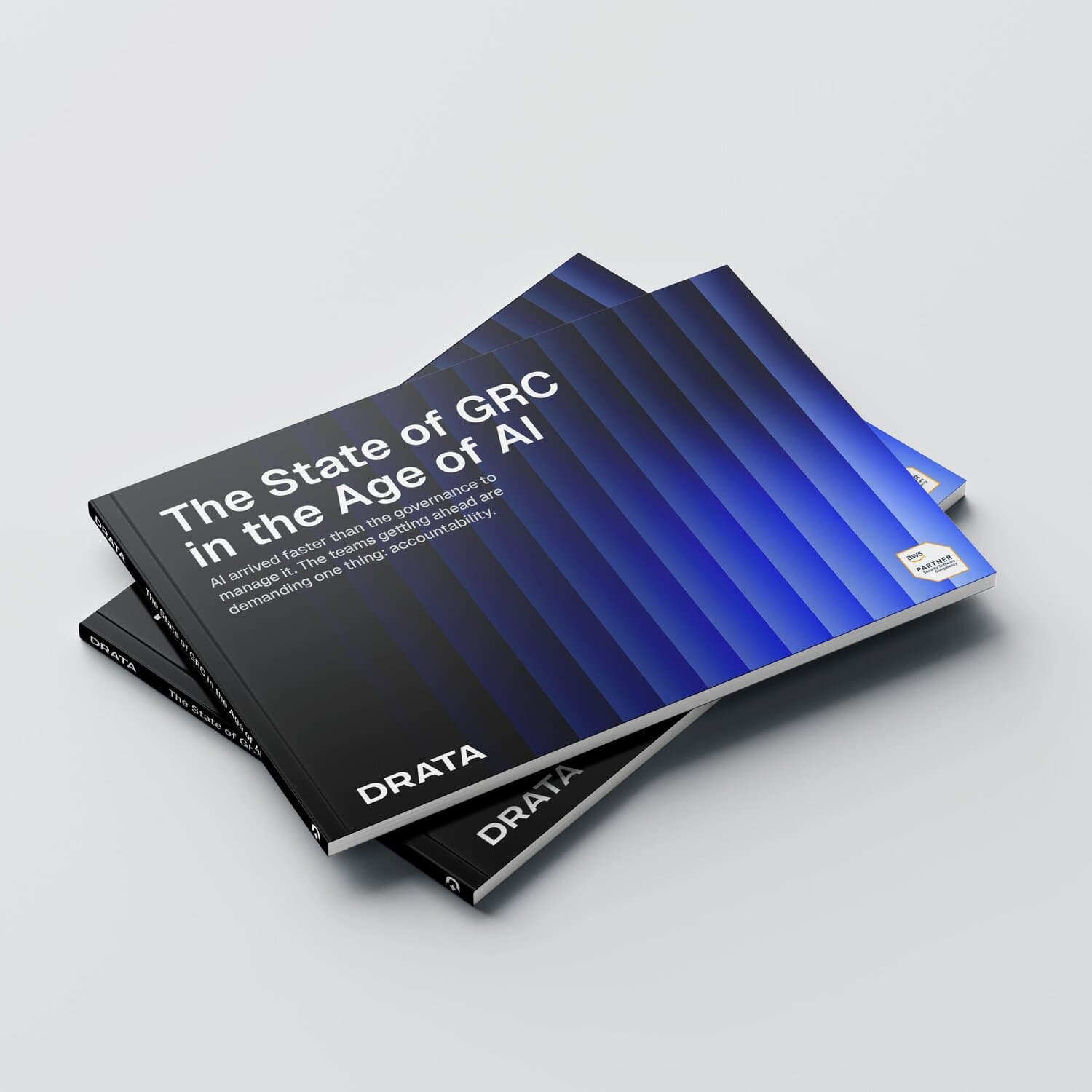
The State of GRC in the Age of AI
Only 13% of IT and security professionals are fully confident they can see every AI tool their teams use. Download The State of GRC in the Age of AI to see what 300 practitioners revealed about governing AI faster than it's outpacing them.
How AI Agents Challenge Traditional Identity Management
Traditional IAM was built for human users with predictable access patterns and a clear owner behind every login. Autonomous AI agents break each of those assumptions in a different way. The challenges below rarely arrive one at a time.
Over-Privileged Access and Shadow AI
AI agents are often granted broad permissions for convenience, because scoping access precisely takes time that teams under pressure do not spend. Every extra permission an agent holds expands the attack surface and the potential damage if it is misused. The problem compounds when agents are deployed without the security team's knowledge at all. This shadow AI, spun up through SaaS connectors or built ad hoc by engineers, operates with no governance, no owner of record, and no review.
Non-Human Identity Sprawl
Service accounts, API keys, machine certificates, and AI agents now multiply far faster than people join an organization, growing 44% between 2024 and 2025. In most enterprises, non-human identities already outnumber human ones by 45 to 1. Each one is a credential that can be stolen, misused, or left active long after its purpose ends, and the sheer volume creates blind spots that security and compliance teams struggle to close.
Accountability Gaps in Autonomous Systems
When an AI agent makes a decision on its own, the audit trail becomes harder to follow. A single person can spawn many agents, each with different scopes, which scatters accountability across software rather than concentrating it in a named individual. If an agent takes an unauthorized action, the first question is also the hardest to answer: who is responsible, and how do you prove what happened?
Governance That Cannot Keep Pace
Manual access reviews and point-in-time audits were designed for a slower world. AI agents act at machine speed and change behavior continuously as OAuth scopes expand or vendor APIs shift. A quarterly review will miss a risky access change that happened, and was exploited, weeks earlier. Governance that runs on a calendar cannot keep up with actors that run around the clock.
What Are Non-Human Identities
A non-human identity is any digital identity that does not represent a person. These identities authenticate systems to one another, let applications share data, and increasingly let AI agents act on a network. Because they are created constantly and rarely retired on schedule, NHIs now outnumber human identities in most enterprise environments, which is why they deserve dedicated governance rather than an afterthought.
NHI Type | Description | Example |
Service accounts | System accounts for application-to-application communication | Database connectors, scheduled jobs |
API keys | Credentials that authenticate API requests | Third-party integrations, webhooks |
Machine identities | Digital certificates for machine-to-machine authentication | TLS certificates, workload identities |
AI agents | Autonomous systems that make decisions and take actions | Copilots, automation bots, agentic AI |
Service Accounts and API Keys
Service accounts and API keys are the traditional workhorses of machine access. Their biggest risk is longevity. They are often long-lived and broadly scoped, and 47% go over a year without rotation, which makes a single leaked key a durable foothold for an attacker. Treating them as identities that need ownership and lifecycle management, rather than set-and-forget plumbing, closes a common gap.
Machine Identities and Certificates
Machine identities use digital certificates to prove that one system can trust another. They require the same lifecycle discipline as human credentials: issuance, rotation, and revocation on a known schedule. An expired or unmanaged certificate can break a service, and a poorly governed one can authenticate access that no one intended to grant.
Agentic AI and Autonomous Systems
Agentic AI describes autonomous systems that take actions toward a goal without a human approving each step. Because they act independently and at speed, they need stricter guardrails than a static service account. Wherever possible, they should operate with tightly scoped, time-bounded, and reviewable access, often using short-lived, just-in-time permissions that expire automatically, which limits how long any agent can act and how much it can reach.
How AI Enhances Identity Security Operations
The same technology that creates new risk also strengthens the defense. AI handles the scale and speed that human teams cannot match, turning identity security from a periodic chore into a continuous operation. This is the identity-security-by-AI side of the practice.
Continuous Access Monitoring
AI establishes a behavioral baseline for each identity and watches for deviations in real time, rather than waiting for a scheduled review. When an account suddenly behaves out of character, the system flags it the moment it happens instead of weeks later when an auditor notices.
Automated Threat Detection and Correlation
Machine learning identifies anomalies, correlates events across disconnected systems, and can predict likely attack paths before they are fully traveled. In practice, that means catching signals such as:
- Unauthorized login attempts from unusual locations.
- Unexpected privilege escalation on an account.
- Access patterns that are inconsistent with an identity's normal role.
Intelligent Least Privilege Enforcement
Static role assignments tend to grant more access than anyone actually uses. AI can right-size permissions dynamically based on real usage, trimming standing access toward what each identity genuinely needs. The result moves an organization closer to true least privilege without a manual entitlement review for every account.
Streamlined Access Reviews and Reporting
Automation replaces slow, manual permission audits with real-time reporting on who accessed what and when. That record is essential for continuous compliance, because it is exactly what auditors ask to see. Automating evidence collection and access reviews keeps teams audit-ready as a byproduct of normal operations, rather than as a fire drill before each assessment.
AI Identity Security Risks and Challenges
Using AI to govern identity is powerful, but it is not free of complexity. These are challenges to manage deliberately, not reasons to avoid the approach.
Data Quality and Training Dependencies
AI is only as good as the data it learns from. Incomplete, stale, or biased input degrades the quality of its decisions, which means data hygiene is a prerequisite for trustworthy automation rather than a nice-to-have.
Algorithmic Bias in Access Decisions
AI systems can inherit or introduce bias in how they provision and review access, granting or restricting based on patterns that do not reflect sound policy. Human oversight and clear governance over how models are used keep these decisions fair and explainable.
Integration and Implementation Complexity
AI identity tools have to connect across existing IAM infrastructure, multiple cloud environments, and a long list of SaaS applications. That integration takes planning, which is why broad, well-supported connectivity is a meaningful differentiator when evaluating platforms.
Maintaining Human Oversight at Scale
Automation should handle the repeatable work, but people remain accountable for decisions and for the boundaries the automation operates within. The goal is a clear division of labor: agentic AI does the volume, and humans own the outcomes and set the limits.
Best Practices for AI Agent Identity Governance
These are steps an organization can begin today. Each one is distinct, and together they form a practical governance foundation for AI agents.
1. Integrate AI Identity into Your GRC Program
AI agent governance is not a separate project living off to the side. It belongs inside your existing governance, risk, and compliance, or GRC, framework, where AI agents are treated as one more identity type that requires oversight. Starting governance-first keeps AI identity aligned with the controls and reporting you already maintain.
2. Inventory All AI Agents and Their Permissions
You cannot govern what you cannot see, so a complete inventory is the foundation everything else rests on. Catalog every AI agent, the permissions it holds, and the data and systems it can reach. The gap between the agents a team thinks it has and the agents actually running is where most of the risk hides.
3. Apply Least Privilege to Every AI Agent
Grant each agent only the minimum permissions its specific function requires, and nothing more. Where possible, use short-lived, just-in-time access so credentials expire automatically rather than lingering as standing privilege. Least privilege is the single most effective way to shrink the damage any one agent can cause.
4. Establish Clear Ownership and Accountability
Every AI agent needs a named human owner. That person is responsible for monitoring the agent's behavior and responding when something goes wrong. Assigning ownership at creation closes the accountability fan-out that occurs when one person can spin up many agents without a record of who answers for each.
5. Implement Continuous Monitoring and Alerting
Real-time monitoring catches risky behavior before it becomes a breach, and automated alerts notify owners of policy violations the moment they occur. Continuous monitoring is what turns a static inventory into living governance, because agents change behavior continuously and your visibility has to keep pace.
How to Implement AI Identity Security Controls
If best practices describe the destination, this is the route. The steps below move a team from assessment to a repeatable program.
1. Assess Your Current AI Identity Posture
Begin by auditing the AI agents, service accounts, and API keys already in your environment. Identify where you lack visibility, where ownership is unclear, and where access controls are missing or too broad. Automated evidence collection can document these controls as you go, turning the assessment into a reusable baseline.
2. Define Policies for AI Agent Access
Establish access policies written specifically for AI agents, covering authentication requirements, permission boundaries, and the actions each class of agent is allowed to take. Defining policies as clear intent, rather than buried in code, lets security and GRC teams own them without waiting on engineering cycles. Document those policies within your GRC platform so they stay connected to the rest of your compliance program.
3. Deploy Identity Governance Automation
Automate discovery, enforcement, monitoring, and evidence collection through an agentic control plane so governance scales with the number of agents rather than the size of your team. On the Drata Agentic Trust Management Platform, this maps to a clear set of capabilities: the Drata Sensor discovers and registers every agent at inception, Mission Control evaluates each agent action against approved policy written as intent, the Trust Ladder stages each policy from training to recommendation to active enforcement, Inline Enforcement blocks violations before they execute, Drift Detection flags the moment an agent operates outside its approved scope, and Chain of Custody preserves a tamper-evident record of every decision mapped to your frameworks.
4. Establish Ongoing Audit and Review Processes
Schedule regular reviews of AI agent permissions and behavior, and treat audit readiness as a continuous state rather than a periodic scramble. When evidence is collected continuously and mapped to your frameworks, an audit becomes a report you can run rather than a project you have to staff.
Govern Every Agent Identity With Drata
Your AI agents are non-human identities—and they already outnumber your people. They accumulate permissions, spin up without an owner of record, and change what they can reach as OAuth scopes expand, all faster than any quarterly access review can track. As this guide makes clear, you cannot govern what you cannot see, and the tools built for human logins were never built for software that acts on its own. That is exactly the gap Drata AI Agent Governance closes.
It extends the same Agentic Trust Management Platform that 8,500+ customers already rely on, rated 4.8 out of 5 on G2, to the agents in your environment—treating every agent as a governed identity inside the GRC program you already run, not a separate system to maintain.
- Discover every agent with the Drata Sensor, which registers each agent at inception and maps it to an owner, identity, permissions, and scope—turning shadow AI and unowned non-human identities into a live inventory.
- Enforce least privilege inline with Mission Control and Inline Enforcement, evaluating every action against approved policy and blocking violations before they execute—the Zero Trust posture autonomous agents demand. Stage each policy from training to recommendation to active enforcement with the Trust Ladder.
- Catch drift the moment it happens with Drift Detection, the instant an agent operates outside its approved scope as permissions expand or a vendor API changes.
- Prove it to anyone with Chain of Custody, a tamper-evident record that ties every action back to a policy and an owner, mapped to SOC 2, ISO 27001, ISO 42001, NIST AI RMF, and more.
It works across the platforms your agents already run on—Anthropic (Claude), OpenAI, Google Vertex AI, and AWS Bedrock—so non-human identity governance lives alongside the rest of your identity and compliance program.
AI Agent Governance is rolling out now through Drata's Early Access program, built alongside enterprises across financial services, healthcare, and software. If you are ready to give every non-human identity an owner, a scope, and proof it stayed in bounds, we would like to build it with you.
Register for Early Access to Drata AI Agent Governance
FAQs about AI Identity Security
What compliance frameworks address AI identity controls
ISO 42001 is a certifiable AI management system standard, and the National Institute of Standards and Technology AI Risk Management Framework (NIST AI RMF) is voluntary guidance for managing AI risk. Established security frameworks like SOC 2 and ISO 27001 do not name AI-agent controls specifically; they set access control, accountability, and evidence expectations that organizations extend to AI agents through their broader identity and governance programs. The EU AI Act, by contrast, is a binding, risk-based regulation whose obligations vary by role and by the risk level of the AI system.
How do organizations audit AI agent access for compliance
Organizations audit AI agent access by maintaining continuous logs of each agent's activity, permissions, and data interactions, then generating reports that demonstrate those controls align with framework requirements.
What is the difference between machine identity and AI agent identity
A machine identity authenticates system-to-system communication using certificates or keys, while an AI agent identity represents an autonomous system that makes independent decisions and requires governance over its actions, not just its authentication.
How often should organizations review AI agent permissions
Organizations benefit from continuous permission monitoring rather than periodic reviews, because AI agents can accumulate or misuse access faster than a traditional quarterly cycle can detect.
Can AI agents follow standard identity access review processes
Standard review processes need adaptation for AI agents, because agents operate continuously and autonomously, which makes real-time monitoring and automated policy enforcement more effective than manual workflows designed for human users.